
Mapping Your Biological Seasons
We live in strange times.
Technology updates every six months. Culture shifts every couple of years. Algorithms learn our weaknesses faster than we notice them.
But our bodies and nervous systems? Still running on firmware designed for an era where people walked a lot and lifted heavy things, nights were dark, food didn't arrive via courier in 20 minutes, and notifications didn't exist.
We're trying to live a complex, high-rise 21st century life on biological software that evolved for completely different problems.
And on top of this, we're drowning in advice:
"Here's the universal protocol for everyone." "Do what I do: morning ice bath, 20 supplements, and 3 workouts a day." "This is the perfect diet, works for anybody."
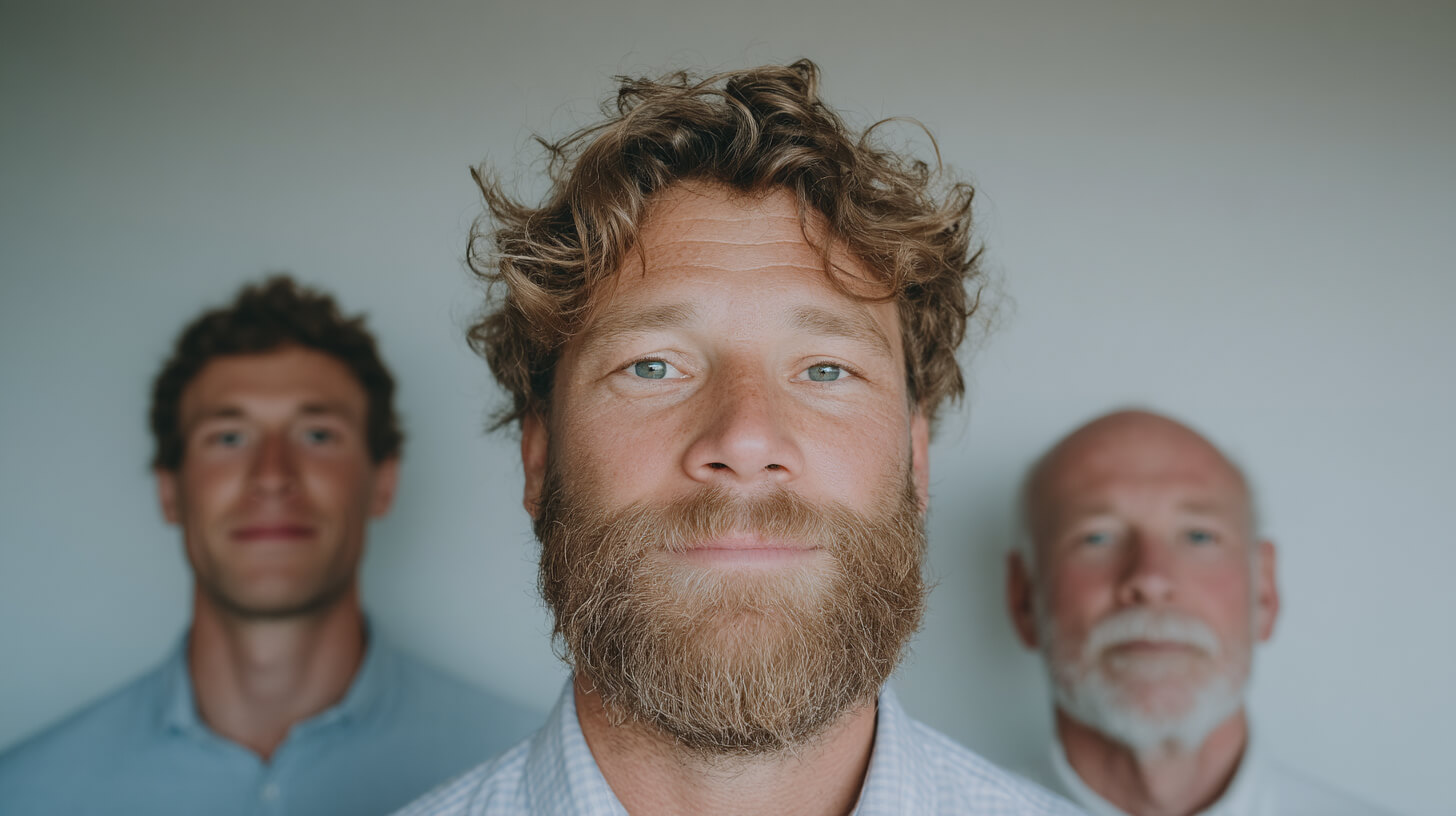
Only there's one small problem: a 16-year-old, a 36-year-old, and a 56-year-old live in radically different biological realities.
They have different hormonal environments, different functional reserves, different nervous system priorities, different life contexts and responsibilities.
But they get sold the same advice.
This article is the entry point to a series on different life phases. We're not giving you "another protocol." We're giving you a map: how healthspan priorities shift as you move through life — and why you need to know your biological season before trying to "optimize yourself."
Why "universal protocols" don't exist
Take two people:
24 years old: back doesn't hurt yet, hormones relatively balanced, maximum ideas, minimum structured lifestyle.
54 years old: hormonal transition, first serious diagnoses among friends, body no longer forgives overload like it used to.
They get the same checklist: wake up at 5 AM, run 10K, follow the same diet, take the same stack of supplements.
Technically it's "about health." In reality, for one person this hits their nervous system and mental health, for another it increases hormonal and cardiovascular risk.
Because your body isn't a construction kit — it's a system in development.
At different life stages it's maturing (adolescence, young adulthood), holding at peak capacity (20s–30s), learning to work with overload (30s–40s), restructuring (45+), starting to run on limited reserve (65+).
Healthspan isn't "living to 120."
It's the question: "How many years in each season do I spend in a state where I can do what matters at this particular age?"
Fast world, slow body
Our bodies and nervous systems can't keep up with culture. We have sedentary work and almost no spontaneous movement. Light rhythms are destroyed: phones, screens, night work. Our brains live in sensory overload: feeds, chats, noise. Healthcare is still mostly reactive: treat consequences, not prevent them.
This gap is especially visible when a teenager gets told to "just pull yourself together and turn off your phone," an adult barely surviving between kids and work is advised to "just take care of yourself," a 60-year-old is told "start running," ignoring joints and cardiovascular risk.
We can't change evolution. But we can stop pretending everyone lives in the same body.
Phase logic: why know your biological season
Phases aren't rigid boxes. Everyone has their own specifics, their own pace. But bodies and nervous systems follow a common developmental logic.
In short: different phases = different key vulnerabilities + different windows of opportunity.
The phases we work with at Biohelping
Below is a quick overview. Each phase has its own detailed article.
0–1 year — basic safety and rhythms: how adults respond to discomfort, what the world sounds and feels like "by default."
1–3 years — movement and food as experience: can you explore your body and space, eat without shame or struggle.
3–6 years — first body and emotion templates: how adults treat you when you're angry, crying, shy; what gets said out loud about bodies.
6–9 years — expanding world: school, grades, sitting still, first conclusions about "who I am" in the system.
10–15 years — nervous system under overload, reinforcement of existing patterns, and first attempts at making your own choices in an environment still shaped by adults.
16–24 years — protecting against burnout and forming your own path in a world demanding you "figure it out right now."
25–34 years — energy for your own projects and basic foundation so life doesn't become endless "later."
35–44 years — boundaries, recovery, and preventing "silent chronic" issues while they still masquerade as normal fatigue.
45–54 years — hormonal restructuring, muscle mass, checkups, and adapting load to a new biological regime.
55–64 years — maintaining functionality, second wave of maturity, reinventing your participation in life.
65–79 years — autonomy, balance, safety, connection, and the feeling "I'm still in the game."
80+ — dignity, connection, and manageable independence, as much as possible in your specific situation.
What all phases have in common
We don't have "one protocol for everyone." But there are four axes that matter at any phase:
1. Sleep
Not "sleep perfectly," but get enough recovery for your phase.
2. Movement and muscle
Not "sports and achievements," but a body that doesn't get in the way of living: walking, climbing stairs, working, playing, loving.
3. Food as context, not religion
Not another diet, but conditions where energy levels are relatively stable, metabolic dysfunction risk decreases, relationship with food isn't built on shame and restrictions.
4. Mind and connection
Not "always be positive," but have minimal self-regulation skills, space where you can tell the truth about your state, people you can live life alongside.
The emphasis shifts across cycles:
- 16–24: focus on nervous system, sleep, relationship with self and attention
- 25–34: energy for your projects and basic foundation
- 35–44: boundaries, recovery, preventing "silent chronic" issues
- 45–54: hormonal transition, muscle, checkups
- 65+: autonomy, balance, safety, connection
But the coordinate system stays the same.
Individual strategy vs systemic change
It's easy to slip into "if you're sick and tired, it's your fault, you didn't try hard enough." That's a lie.
Our healthspan is shaped by forces much bigger than us: urban design and transit, work structure (9–10 hours at a computer), attention economy (companies fight harder for our screen time than our money), healthcare structure (95% of resources on treatment, scraps on prevention), culture of "burning out" and heroism.
But that doesn't erase the personal level. It changes the framing:
We're not "to blame" for growing up in this system, but we do have a chance — within our phases, contexts, capacities — to take steps that actually increase our healthspan.
And here's the key: doing it alone is nearly impossible.
Why community and collective experience matter
One person against algorithms, sedentary work, "push yourself harder" culture, insomnia, inherited body-relationship scripts — usually loses.
That's not weakness. That's system design.
So at Biohelping we're betting not just on a web tracker, AI assistant, and scientific filter, but on community.
Community means:
Support — where you can say "I can't handle this" and not hear "your fault," but instead: "let's figure out how to help you gently."
Collective knowledge — where doctors, researchers, practitioners, and regular people gather real cases: what actually works at 35–44, what works at 65–79.
Protocol evolution — our current protocols are gentle start, but they need to evolve with the community: updated with new data, context, real lives, not frozen as dogma.
Simply put: healthspan is a team sport. At individual, family, team, city, and system levels.
Where Biohelping fits
We don't want to be another service screaming "Optimize yourself NOW."
We're building a Healthspan Movement around three layers:
1. Phase map and meaning
Articles like this and detailed texts on each age — so you can recognize yourself and see not just risks, but the tasks and opportunities of your season.
2. Gentle start tools
Free web tracker across four tracks: Sleep, Nutrition, Body, Mind — as a soft entry into prevention without heroic marathons. Later, an AI assistant that accounts for phase and context, not the same checklist for everyone.
3. Community and collective intelligence
A Discord space where people from different ages and contexts try things, share, refine protocols; doctors and researchers help filter out anti-scientific noise; practice moves not "top-down" but from inside people's actual lives.
How to use this map
Simplest approach:
1. Identify your biological season
Not by ID, but by how you feel + current life tasks. (25–34, 35–44, 45–54… or maybe you're parenting a teenager.)
2. Read the article about your phase
Notice where you recognize yourself. That's already diagnosis — no labs needed.
3. Pick one step, not twenty
Something very small: go to bed 30 minutes earlier, walk 10–15 minutes after a meal, make one "anchor" meal each day, have an honest conversation about your state with someone you trust.
4. If it resonates — go deeper
Into the tracker, community, challenges, future AI assistant. Like an experiment, not an exam.
Healthspan isn't about "the perfect version of yourself."
It's about a very simple but honest question: "In my life season right now, am I living or just surviving?"
From there, you can dive into the article about your age — and start negotiating with your body, nervous system, and life on new terms.
Not for a checkbox. For yourself. And for those you share this life with.